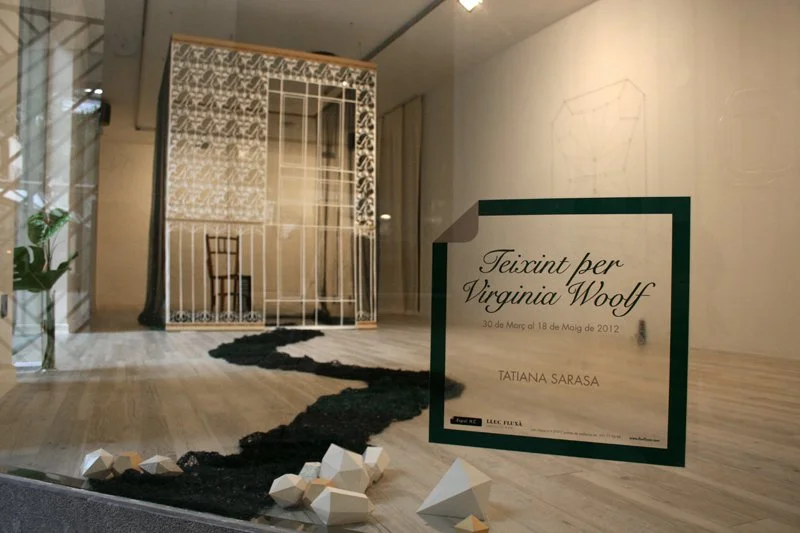
A room of my own
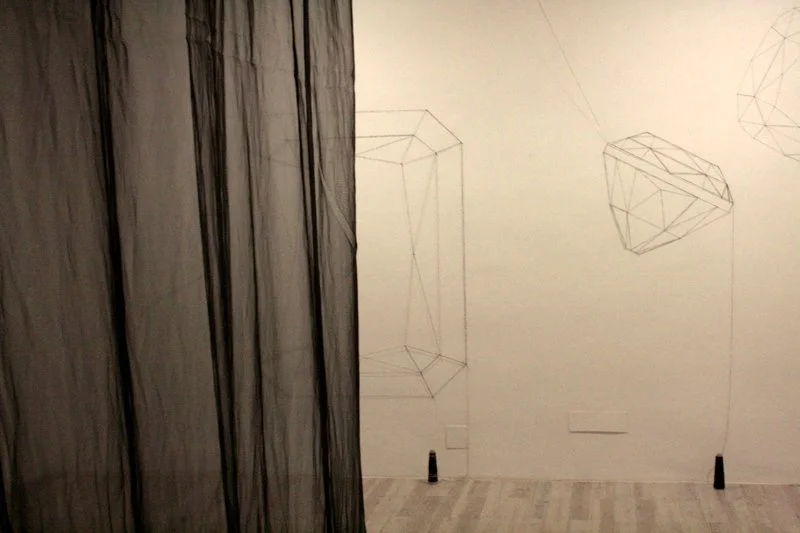
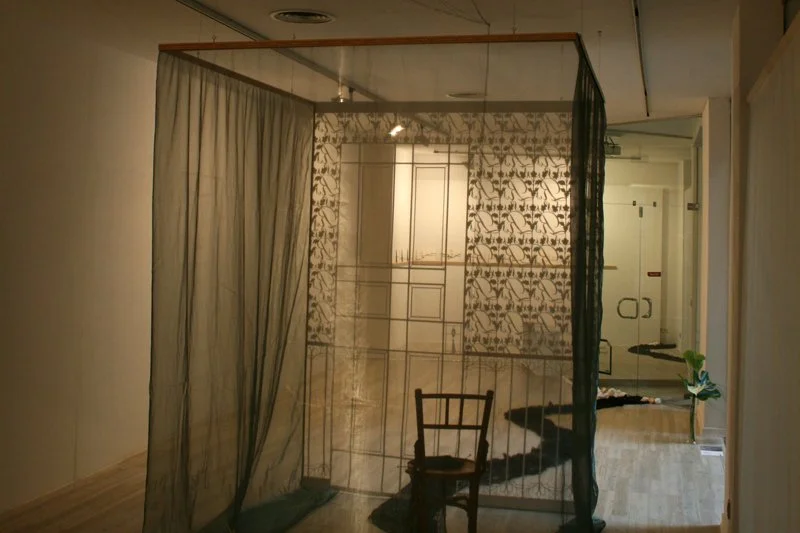
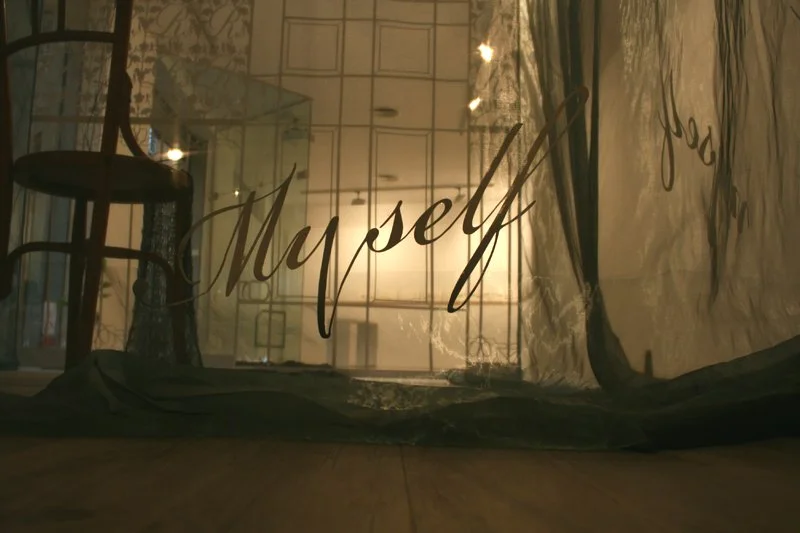
2012 / Installation, variable sizes / Paper cut, knitted textiles, chair, threads, nails, paper gem figures, chair, knitting needles, fine curtain, aluminum structure.
Exhibition: Knitting for Virgina Woolf, Lluc Fluxá Gallery, Palma, Mallorca. 2012
A ROOM OF MY OWN
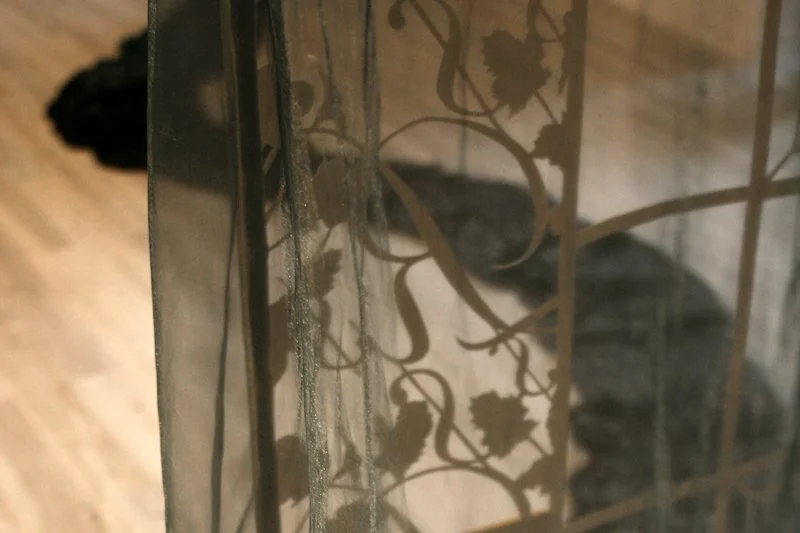
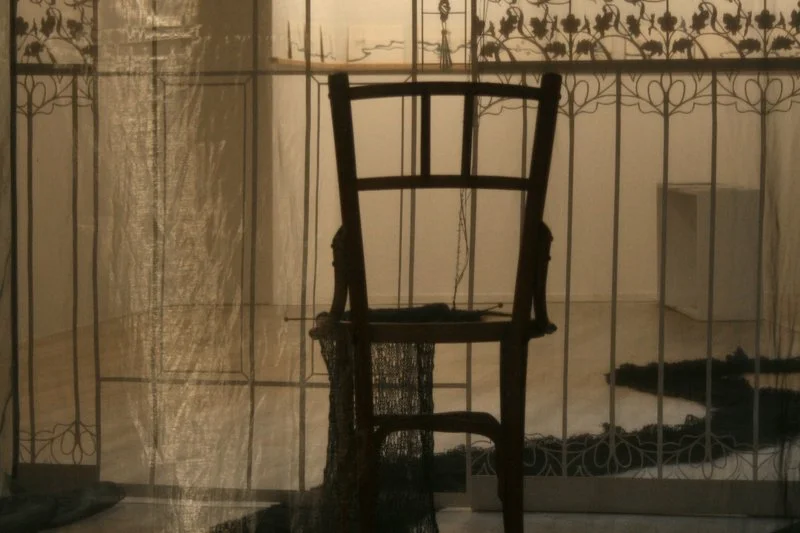
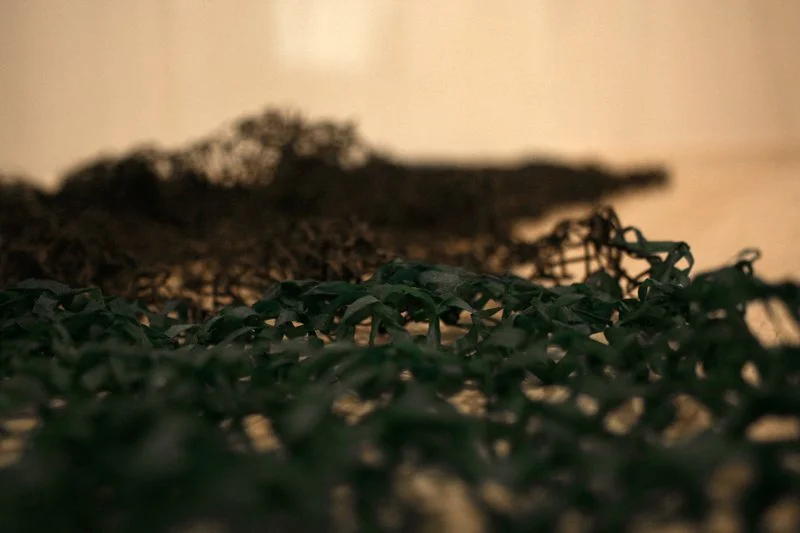
Inspired by Virginia Woolf, English writer (1882 .1941) I built a room of my own. Not with bricks or cement, but with a paper and lightweight gauze. A membrane, as if a celular structure, to give me protection but also permeability. A place where to absorb the myriad of impressions collected each day. A room to process them, to transform them into a kintted river that would slide under the door, taking it’s own curves and flow.
Inspirada por Virginia Woolf, escritora inglesa (1882-1941), construí una habitación propia. No con ladrillos ni cemento, sino con papel y una gasa ligera. Una membrana, como si de una estructura celular se tratase, que proporcionara protección, pero también permeabilidad. Un lugar donde poder absorber la miríada de impresiones que recojo cada día. Una habitación para procesarlas, para transformarlas en un río entrelazado que se deslizara bajo la puerta, siguiendo sus propias curvas y su propio curso.
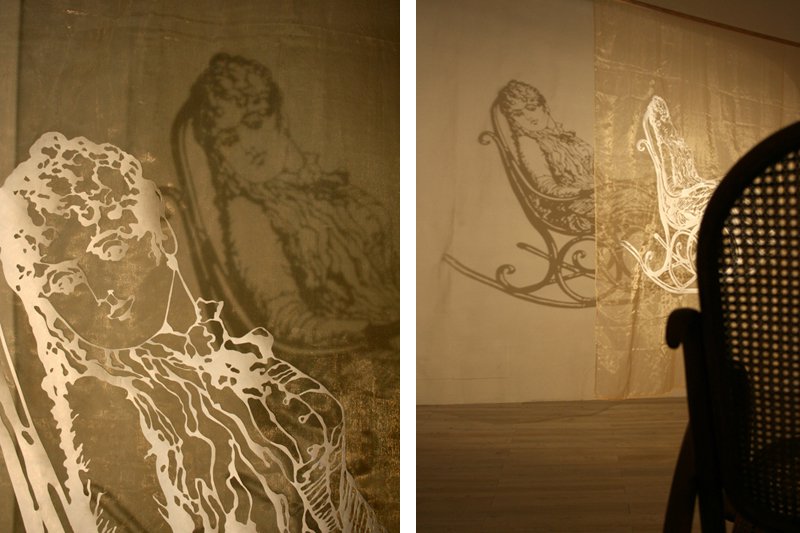
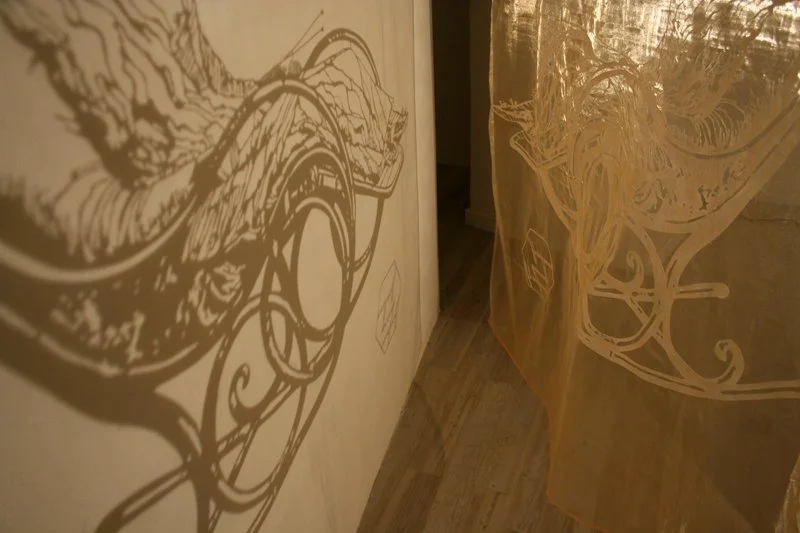
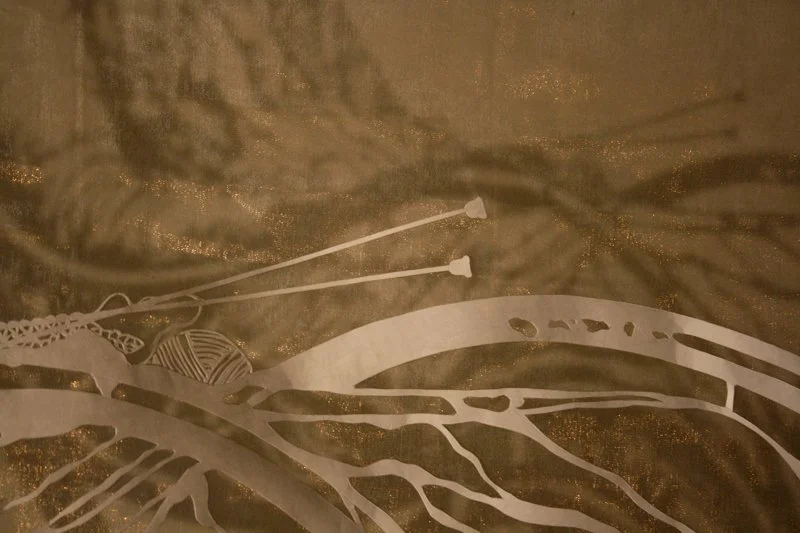
Presence, Absence, 2012
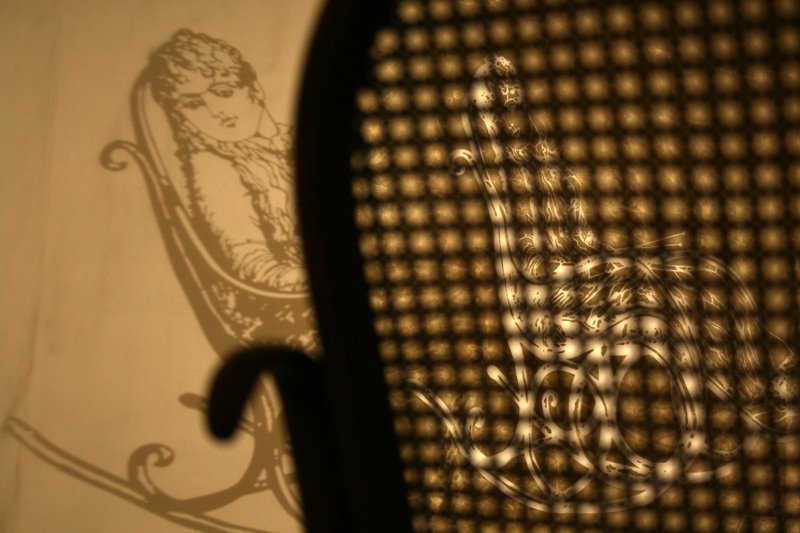
Installation variable sizes, Textile gauze with paper cut and spotlight, Rocking chair with knitting needles.
Exhibition: Knitting for Virgina Woolf, Lluc Fluxá Gallery, Palma, Mallorca. 2012
Presence. Absence
The character Mrs. Ramsey, from Virginia Woolf’s novel *To the Lighthouse*, knits, just like the artist Tatiana Sarasa.
Although knitting was associated at that time with the traditional Victorian ideal of the “angel of the house,” it can also be a subversive symbol, as the rhythmic act of knitting constitutes a silent affirmation of her autonomy and an intimate art form.
Through the use of textile art as a symbolic activity, Virginia Woolf creates an alternative reality in which women are not defined by their partners or circumstances, but are creators with complete control over their legacy—both material and social.
Drawing from her own experience, the artist champions this capacity of knitting to allow one to escape the confines of a domestic environment and maternal responsibilities, and to be free to create, express oneself, or dream.
El personaje Mrs. Ramsey, de la novela “Al Faro” de Virginia Woolf teje, al igual que la artista Tatiana Sarasa.
Aunque en el tejer se asimila en esa época al ideal victoriano tradicional del «ángel del hogar», el tejido puede ser un símbolo subversivo, ya que que su rítmica labor de tejido también constituye una silenciosa afirmación de su autonomía y una forma de arte íntima.
Virginia Woolf crea a través del usa del arte textil como una actividad simbólica, una realidad alternativa, en la cual las mujeres no son definidas por sus parejas o situación, sino son creadoras con tienen control completo sobre su legado, tanto material como social.
Por experiencia propia, la artista reivindica esta capacidad del tejido, de permitir evadirse en un entorno doméstico y de responsabilidad maternal, y poder ser libre, para crear, expresarse o soñar.